Creating a study timetable for students at home is one of the most effective ways to improve productivity and achieve better results in exams. Many students struggle with managing time, but with the right strategy, you can study smarter and not harder. Whether you are preparing for school exams, competitive exams, or self-improvement, having a proper study plan at home can significantly boost your productivity and results.

Many students struggle with distractions, procrastination, and lack of focus. The solution? A perfectly balanced daily study routine that maximizes efficiency while maintaining mental health.
In this guide, you’ll learn how to create the best study timetable at home, along with proven strategies used by toppers.
Why Study Timetable is Important for a Students
A proper study timetable for students helps you stay organized and focused. Instead of wasting time thinking about what to study next, you follow a clear plan.
A study timetable is not just a schedule—it’s a roadmap to success. Here’s why it matters:
- Helps manage time effectively
- Reduces stress and last-minute pressure
- Improves concentration and consistency
- Ensures all subjects are covered
- Builds discipline and good habits
Principles of an Effective Study Timetable For Students
Creating an effective study timetable is one of the most important steps for academic success. A well-structured plan not only improves productivity but also helps students manage time efficiently, reduce stress, and achieve better results. Below are the key principles every student should follow to design a practical and result-oriented study schedule.
1. Set Clear and Achievable Goals
Before creating a timetable, define your academic goals. Whether it is completing a syllabus, scoring high marks, or preparing for competitive exams, having clear objectives gives direction to your study plan and keeps you motivated.
2.Prioritize Subjects Based on Importance
Not all subjects require equal time. Allocate more hours to difficult or high-weightage subjects while maintaining a balance with easier topics. This ensures efficient utilization of your study time.
3. Follow a Structured Study Pattern
Adopt a proven study technique such as the Pomodoro Technique (50 minutes study + 10 minutes break). This helps maintain focus, prevents burnout, and improves learning efficiency.
4. Create a Realistic and Flexible Schedule
Avoid overloading your timetable with unrealistic targets. A practical and flexible schedule is easier to follow consistently and allows adjustments when needed.
5. Include Regular Revision Time
Revision is essential for long-term retention. Dedicate specific time slots in your timetable for revising previously studied topics to strengthen your understanding.
6.Minimize Distractions
A productive study environment is crucial. Keep distractions like mobile phones and social media away during study sessions to maintain concentration and efficiency.
7. Add Revision Time
Regular revision is key to long-term memory and better performance.
8. Evaluate and Improve Your Plan
Regularly review your timetable to identify what works best for you. Make necessary adjustments to improve productivity and adapt to changing academic needs.
9.Maintain a Healthy Balance
An effective timetable includes not only study time but also proper sleep, exercise, and relaxation. A balanced routine improves mental health and overall performance.
Best Study Timetable for Students at Home
Here is a perfect daily study routine you can follow:

Morning (5:00 AM – 9:00 AM)
Start your day with difficult subjects. A study timetable for students at home should always include morning study for better concentration.
- 5:00 – 5:30 AM → Wake up & freshen up
- 5:30 – 7:30 AM → Study toughest subject (high focus time)
- 7:30 – 8:00 AM → Breakfast break
- 8:00 – 9:00 AM → Revision / Practice questions
Morning is the best time for high concentration.
Mid-Morning (9:00 AM – 1:00 PM)
Continue with theory subjects. Following a study timetable for students at home helps you maintain consistency.
- 9:00 – 11:00 AM → Second subject study
- 11:00 – 11:30 AM → Short break
- 11:30 – 1:00 PM → Practice / mock tests
Afternoon (1:00 PM – 4:00 PM)
- 1:00 – 2:00 PM → Lunch + rest
- 2:00 – 4:00 PM → Light study (easy subjects / revision)
Evening (4:00 PM – 8:00 PM)
Practice questions and revise. This is an essential part of any study timetable for students at home.
- 4:00 – 5:00 PM → Exercise / refresh mind
- 5:00 – 7:00 PM → Study + problem-solving
- 7:00 – 8:00 PM → Dinner
Night (8:00 PM – 10:30 PM)
Revise the entire day. A good study timetable for students at home always includes revision time.
- 8:00 – 9:30 PM → Revision of entire day
- 9:30 – 10:00 PM → Plan for next day
- 10:30 PM → Sleep (Minimum 6–7 hours sleep is necessary)
Weekly Study Plan Strategy
To improve results, your study timetable for students at home should include weekly revision and mock tests. A well-planned weekly strategy helps you stay consistent, track progress, and cover the syllabus effectively.
1. Divide Subjects Across the Week
- Assign specific subjects to each day
- Focus more on difficult subjects multiple times a week
- Example:
- Mon–Tue → Physics
- Wed–Thu → Chemistry
- Fri–Sat → Biology
- Sunday → Revision
2. Set Weekly Goals
- Decide topics to complete in advance
- Keep goals realistic and achievable
- Track your progress at the end of the week
3. Follow the 3:2:1 Rule
- 3 days → Learning new concepts
- 2 days → Practice questions
- 1 day → Full revision
- 1 day → Mock test + analysis
4. Balance All Subjects
- Avoid focusing only on one subject
- Give time to all subjects equally
5. Keep One Day for Revision
- Revise all topics studied during the week
- Strengthen memory and clear doubts
Common Mistakes to Avoid in a Study Timetable
Making a study timetable is easy, but following it correctly is the real challenge. Here are some simple and important mistakes you should avoid to make your study plan more effective:
1. Overloading Your Schedule
- Don’t try to study 10–12 hours daily from Day 1.
- Start small and increase gradually.
2. Not Taking Breaks
- Studying continuously makes you tired and less focused.
- Always take short breaks (5–10 mins) after every session.
3. Using Phone During Study
- Checking social media again and again kills your focus.
- Keep your phone away or on silent mode.
4. Ignoring Revision
- Only studying new topics is not enough.
- Revise daily to remember things longer.
5. Wasting Time on Easy Subjects
- Spending too much time on easy topics is a mistake.
- Focus more on difficult subjects.
6. Making a Very Strict Timetable
- If your plan is too strict, you won’t follow it.
- Keep it flexible and realistic.
7. Not Getting Enough Sleep
- Late-night study without sleep reduces performance.
- Take 7–8 hours proper sleep.
Best Tools for Study Timetable for Students
Creating and managing a study timetable becomes much easier when you use the right tools. These tools help you plan, track, and stay consistent with your study routine.
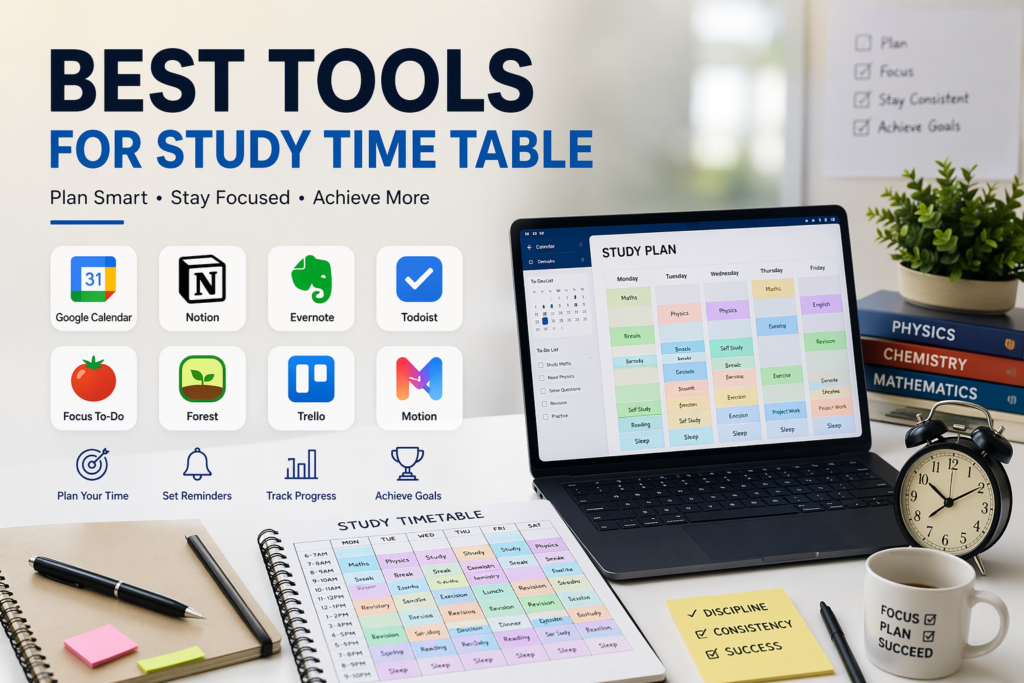
1. MyStudyLife – All-in-One Study Planner
- A powerful app specially designed for students to manage classes, exams, and study schedules in one place.
- It sends reminders and helps you stay organized daily.
2. Notion – Smart Study Organizer
- Perfect for creating custom study timetables, notes, and trackers.
- You can design your own dashboard and manage everything in one place.
3. Google Calendar – Time Scheduling Tool
- Best for planning your daily study routine with alerts and reminders.
- Helps you organize subjects and deadlines easily.
4. Todoist – Task Management Tool
- Helps you create daily study tasks and priorities.
- Great for tracking assignments and staying productive.
5. Forest – Focus & Anti-Distraction Tool
- A unique app that helps you stay focused by growing a virtual tree while studying.
- Best for avoiding phone distractions and improving concentration.
6. Anki – Smart Revision Tool
- Uses spaced repetition to help you remember topics for a long time.
- Ideal for exam preparation and revision.
7. Structured – Visual Time Table Planner
- Shows your entire day in a timeline format.
- Helps you plan study sessions clearly and visually.
How to Stay Motivated While Studying
Staying motivated is the biggest challenge. Here’s how to overcome it:
- Set small goals
- Reward yourself after completing tasks
- Track your progress
- Study with friends (virtually or physically)
- Watch motivational videos
Importance of Health in Study Routine
A healthy body and mind are the foundation of effective learning. No matter how perfect your study timetable is, without good health, it becomes difficult to stay focused, productive, and consistent. Maintaining proper health ensures better concentration, memory, and overall academic performance.

Improves Concentration & Focus
A healthy lifestyle helps your brain function better. Proper sleep, nutrition, and exercise improve your ability to concentrate for longer study sessions.
Boosts Energy Levels
Eating balanced meals and staying active keeps your energy levels high throughout the day. This allows you to study without feeling tired or lazy.
Enhances Memory & Learning
Sleep plays a key role in memory retention. Getting 7–8 hours of quality sleep helps your brain store and recall information more effectively.
Reduces Stress & Anxiety
Regular exercise, meditation, and breaks help reduce stress. A relaxed mind can understand concepts faster and perform better in exam.
Tips to Stay Healthy :-
Eat Nutritious Food
- A balanced diet provides the energy your brain needs to function properly.
- Include fruits, vegetables, nuts, and protein-rich foods in your daily routine.
Stay Hydrated
- Drinking enough water keeps your mind fresh and improves concentration.
- Aim for at least 6–8 glasses of water daily.
Exercise Daily
- Regular physical activity boosts blood flow to the brain and reduces stress.
- Even 20–30 minutes of exercise can improve focus and mood.
Get Proper Sleep
- Sleep is essential for memory and learning.
- Take 7–8 hours of quality sleep every night for better performance.
Benefits of Following a Study Time Table
A well-planned study timetable is not just a schedule—it’s a powerful tool that transforms your preparation into results. It helps you stay organized, focused, and consistent throughout your journey.
Gives Clear Direction
- A study timetable removes confusion by giving you a clear plan for what to study and when, saving time and effort.
Improves Time Management
- You learn how to divide time effectively between subjects, ensuring no topic is left behind.
Boosts Productivity
- With a fixed routine, you avoid distractions and complete tasks faster, leading to higher daily output.
Enhances Focus & Discipline
- Following a schedule builds strong habits, improving your concentration and self-discipline over time.
Ensures Regular Revision
- A good timetable always includes revision slots, helping you retain information for a longer time.
Maintains Balance
- It allows you to manage study, rest, and personal time, preventing stress and burnout.
Increases Chances of Success
- Consistency + proper planning = better performance in exams. A timetable keeps you on track towards your goal.
Conclusion:
In conclusion, a well-structured study timetable for students at home is the key to achieving academic success in 2026. It not only helps you manage your time effectively but also improves your focus, consistency, and overall performance. Instead of studying randomly, having a clear plan ensures that every subject gets proper attention and no time is wasted.
Remember, the goal is not to create a perfect timetable but to follow it consistently. Even a simple and realistic routine can bring powerful results if you stay disciplined. Start with small steps, adjust your schedule according to your needs, and gradually build a strong study habit.
Success doesn’t come from studying more hours—it comes from studying smart with the right strategy. So, create your ideal study timetable for students at home, stay committed, and you will definitely see improvement in your results and confidence.